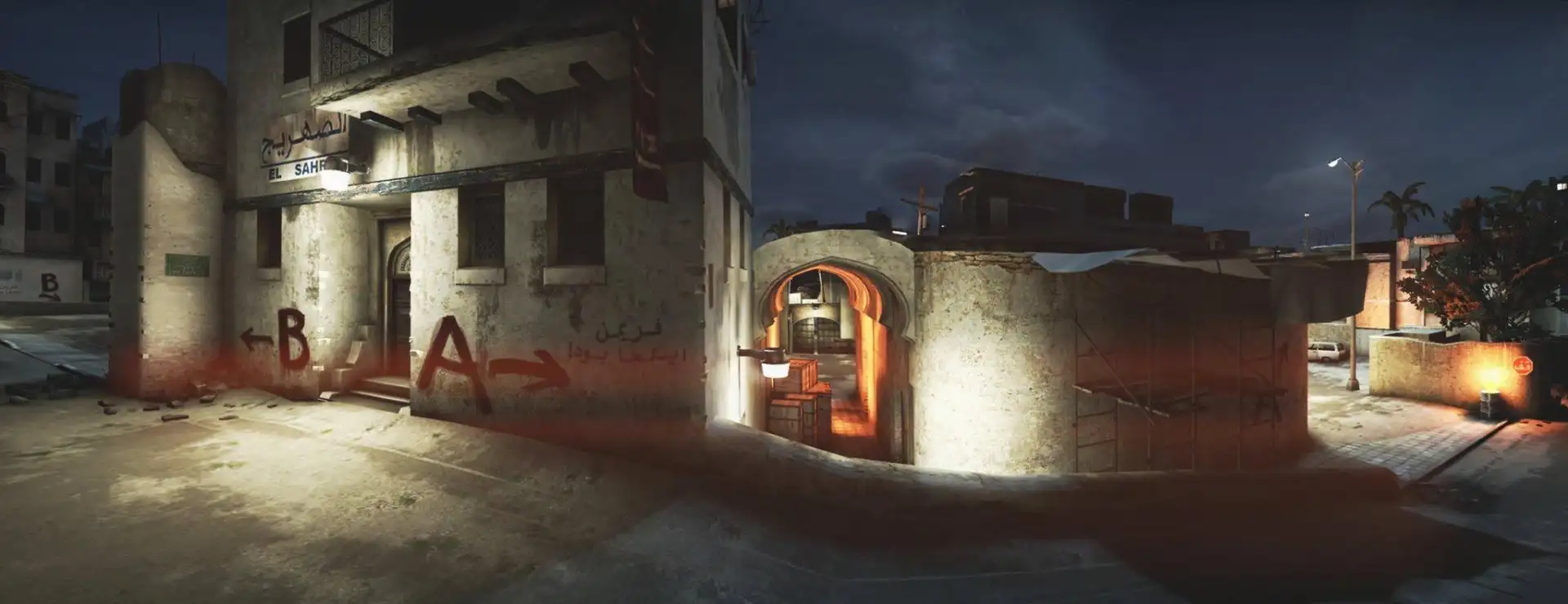
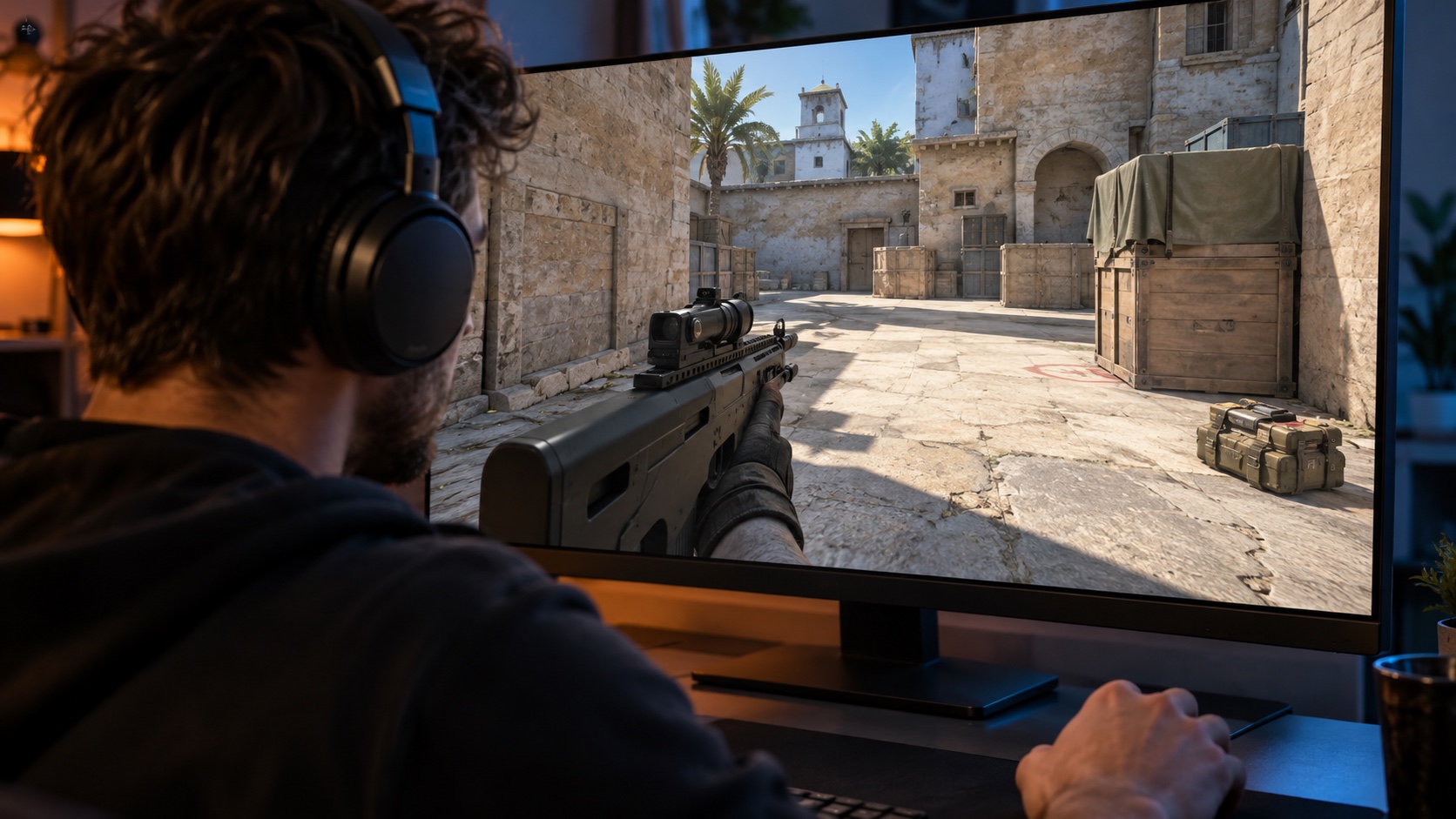
Valve’s October 8 Counter-Strike 2 update makes two practical changes easy to spot in a match: a ping icon now marks a dropped defuse kit, and the AUG reload takes half a second less time. The same patch also addresses audio, map clipping, localization and stability, so its scope is broader than the weapon adjustment alone.
The notes are specific about what changed and careful about what did not. They do not announce a wider AUG balance pass involving damage, accuracy or rate of fire. The confirmed weapon adjustment is reload duration, while the dropped-kit marker is a visibility aid intended to make equipment easier to identify and communicate around.
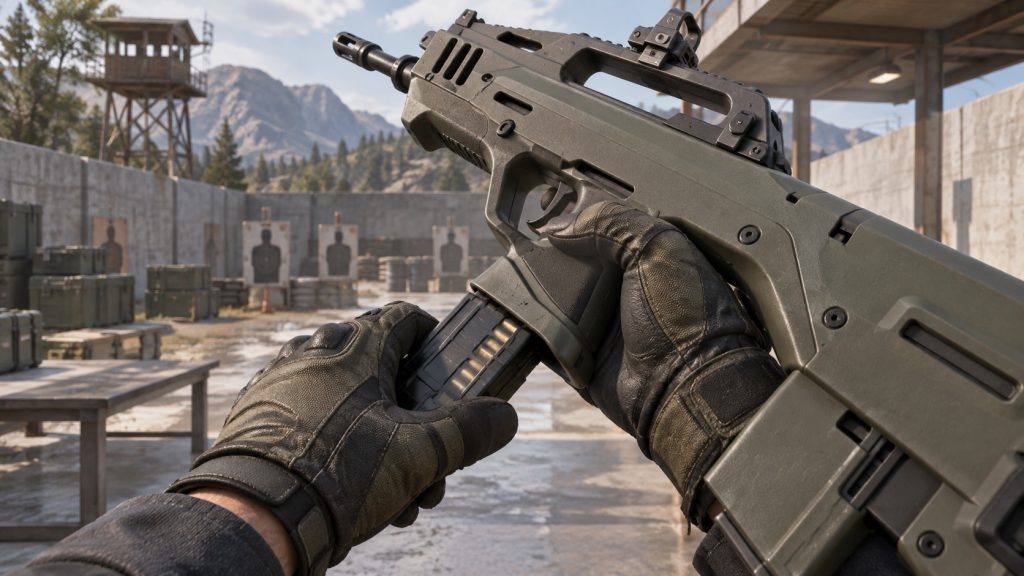
The reload change is small in absolute time, but it concerns a familiar tactical moment: returning an AUG to a usable state between engagements. The patch notes state only that the time was reduced by half a second. They do not publish a new total reload duration or describe how the adjustment should change a team’s weapon selection, so those conclusions should be left to players testing the update in live rounds.
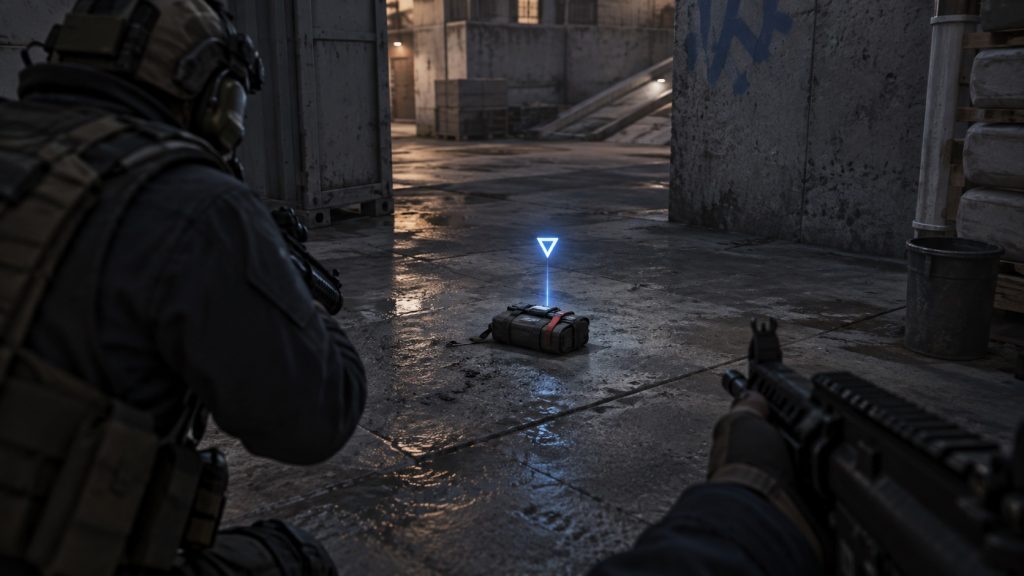
The dropped defuse-kit ping is a separate quality-of-life change. A kit can be lost when its carrier is eliminated, and a visible marker gives teammates a clearer reference point. Valve’s note confirms the icon addition but does not specify new interaction rules or a different pickup mechanic.
The patch focuses on small, concrete match and audio fixes
Alongside the AUG adjustment, Valve fixed an audio event that could occur during a silent Desert Eagle reload. It also addressed a buzzing soundscape issue during demo playback. These are separate fixes: one concerns a gameplay sound event tied to reloading, while the other concerns playback of recorded matches. The update note does not indicate that either change alters weapon handling or demo controls.
Map work in the same update is limited to clipping fixes on Rush maps. Clipping issues can affect how players or objects interact with map geometry, but Valve’s note does not enumerate particular locations or describe a larger redesign. It is therefore more accurate to describe this as a set of corrections than to suggest that Rush received a new layout.
The remaining entries cover localization and stability. Those labels are broad and the notes provide no further detail, so they should not be expanded into claims about a particular language, crash or performance problem. Taken together, the changelog presents a patch centered on a few visible gameplay refinements and a collection of maintenance fixes.
- Dropped defuse kits now have a ping icon.
- AUG reload time was reduced by half a second.
- Valve fixed an audio event during silent Desert Eagle reloads.
- A buzzing soundscape issue during demo playback was fixed.
- Rush map clipping, localization and stability were also addressed.
The distinction between a small weapon timing adjustment and a full balance change matters when interpreting a short patch note. A half-second reduction affects one part of the AUG reload sequence, but Valve did not say that the rifle’s damage, firing rate or accuracy changed. Players may assess the practical effect themselves, but the published notes support only the reload claim.
The kit ping likewise adds information rather than a new game mechanic. It gives a clearer visual indication of equipment that has been dropped, while the note says nothing about automatic pickup, kit availability or the defuse timer. This keeps the change easy to understand: it is a communication and visibility improvement around an existing item.
The other fixes are narrower still. A sound event, a demo-playback ambience issue and Rush-map clipping are named, but no locations, affected languages or technical causes are supplied. For players, the practical approach is to treat the update as a compact maintenance patch with two easy-to-identify gameplay-facing adjustments.
What players can verify after installing the update
The two headline changes are straightforward to check in a controlled match. Players can observe the new marker when a defuse kit is dropped and compare the AUG reload animation and timing with their prior experience. The patch note states the size of the reduction but not the new total duration, so any precise before-and-after timing should come from an in-game test rather than guesswork.
The audio fixes can be evaluated in their stated contexts: during silent Desert Eagle reloads and during demo playback. Valve also lists Rush clipping, localization and stability improvements, without naming a specific map spot or problem. That limited wording is a reason not to claim a broader competitive change than the developer announced.
This update does not introduce a new weapon, map or mode in the published notes. Instead, it adjusts a small part of the AUG reload, improves dropped-kit visibility and cleans up several technical issues. The immediate impact should be judged from play and replay testing, not from assumptions about a full weapon rebalance.
| Area | Change | What the notes confirm |
|---|---|---|
| Utility | Ping icon for dropped defuse kits | Visibility marker added |
| AUG | Reload reduced by half a second | No other AUG balance changes listed |
| Desert Eagle | Silent-reload audio event fixed | Audio fix |
| Demo playback | Buzzing soundscape issue fixed | Playback audio fix |
| Rush and general | Clipping, localization and stability updates | No detailed locations or causes given |
The October 8 CS2 update pairs a half-second reduction to AUG reload time with a new ping icon for dropped defuse kits. Valve also fixed a Desert Eagle reload sound event, a demo-playback buzz and clipping on Rush maps, and listed localization and stability work.
The changelog does not describe a wider AUG rebalance or a Rush redesign. Its clearest effect will be visible in ordinary play: a slightly shorter reload and an easier-to-spot dropped kit, backed by a set of targeted maintenance fixes.

Comments