

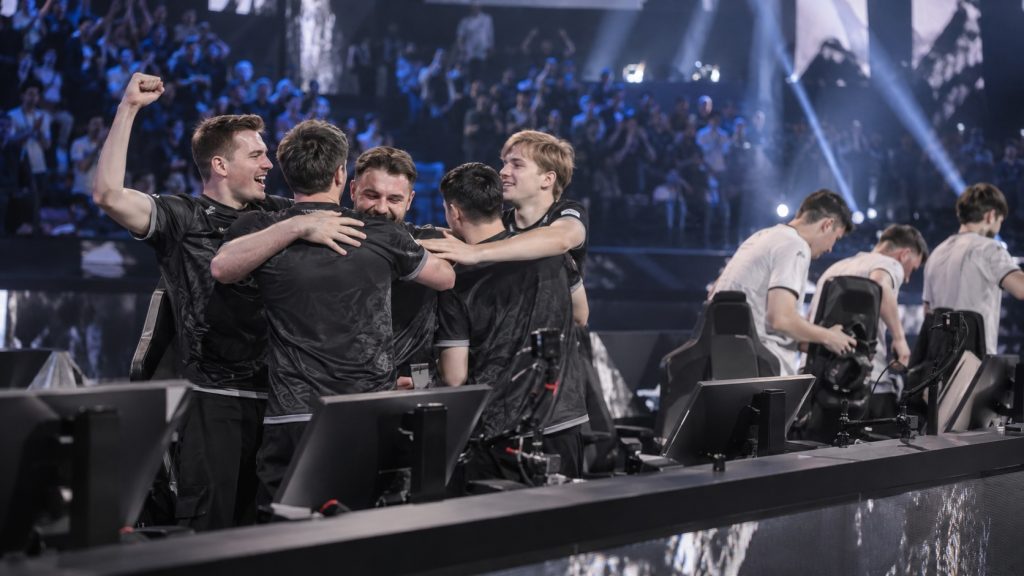
FaZe and Astralis opened Stake Ranked Episode Four with defeats and immediately moved into the lower side of the bracket. Nemiga swept FaZe, while Alliance recovered through two close maps to defeat Astralis across three maps.
Both teams now face a short route with no room for another loss, but the consequences are not identical. HLTV’s qualification model indicated a sharper Singapore Major impact for FaZe because Nemiga is a direct invite rival, whereas Astralis still has more ranking opportunities available.
FaZe’s series turned dramatically on Mirage. They led 9-2 and appeared to control their own pick, then won only three of the next 17 rounds as Nemiga took the map 16-12. Nemiga carried the momentum to Ancient, built a 10-5 lead after the side swap and closed the map 13-11.
Astralis had a longer series against Alliance. Alliance won Inferno 16-14 despite finishing the map with a 9-21 record in opening duels, Astralis answered on Cache and then let an advantage on Nuke become an Alliance victory by 13-10.
How two favorable positions became opening defeats
The common issue was not a lack of early opportunity. FaZe established a seven-round Mirage lead, and Astralis held useful margins on both Inferno and Nuke. The failures came when the opponent changed the direction of the map and the favored team could not stop consecutive rounds from becoming a full comeback.
Alliance’s Inferno result was particularly unusual because its poor opening-duel record should normally make recovery harder. Instead, the team climbed from 6-10 and later survived a 12-14 deficit. That suggests Alliance extracted value from later-round trading and decision-making even after frequently losing the first engagement.
The key day-one outcomes were:

- Nemiga defeated FaZe 16-12 on Mirage and 13-11 on Ancient.
- Alliance beat Astralis 16-14 on Inferno and 13-10 on Nuke, while Astralis answered on Cache.
- Luminosity swept B8 2-0 and advanced on the upper side of the bracket.
- BIG recovered to defeat fnatic 2-1 and set up an upper semi-final with Luminosity.
For FaZe, the ranking context magnifies what might otherwise be treated as one poor series. The model cited by HLTV placed their Major qualification chance at 77% with a victory but at 48% after defeat. Those are model estimates rather than guarantees, yet the swing illustrates the value of beating a direct VRS competitor.
Astralis cannot be comfortable, but their calendar gives them more routes to collect points. Their immediate problem is competitive rather than mathematical: the team has to prevent another winnable position from slipping away in an elimination match.
Neither loss can be repaired by protecting a previous lead. Both teams must identify why their defensive or offensive control disappeared, then make adjustments quickly enough for the next opponent.
Lower-bracket response now matters more than reputation
FaZe need to restore closing discipline. A 9-2 Mirage advantage provides enough margin to test alternative solutions, but three wins across the following 17 rounds show that Nemiga repeatedly found the better answers. Ancient was closer, although Nemiga again established the decisive cushion after halftime.
Astralis can take confidence from the Cache response while still treating the Nuke reversal as the urgent review point. A three-map series often rewards the team that resets fastest, and Alliance recovered from a one-sided second map without allowing it to define the decider.
The bracket positions after the opening round show why the next series is decisive.

| Team | Opening result | Immediate consequence |
|---|---|---|
| FaZe | Lost to Nemiga | Lower bracket and reduced modelled Major odds |
| Astralis | Lost to Alliance | Lower bracket with further ranking chances |
| Nemiga | Swept FaZe | Upper bracket and valuable direct-rival win |
| Alliance | Beat Astralis | Upper bracket after two comebacks |
| Luminosity / BIG | Opening wins | Scheduled upper semi-final meeting |
Day one demonstrated that established names could not rely on strong starts. Nemiga punished FaZe’s collapse on Mirage, and Alliance stayed composed through difficult positions against Astralis before taking the deciding map.
The next match will determine whether each favorite’s opening loss is a recoverable warning or an early exit. For FaZe in particular, the result also carries a visible Major qualification cost, making the lower-bracket response important well beyond this tournament. Astralis has more ranking opportunities, but another defeat would still end this event before the team could recover any competitive momentum.
The opening round also rewards the teams that stayed composed under pressure. Nemiga and Alliance now control their upper-bracket routes, while Luminosity and BIG can build on winning starts. FaZe and Astralis must produce the same resilience immediately, because there is no additional series available after the next lower-bracket defeat.
Comments